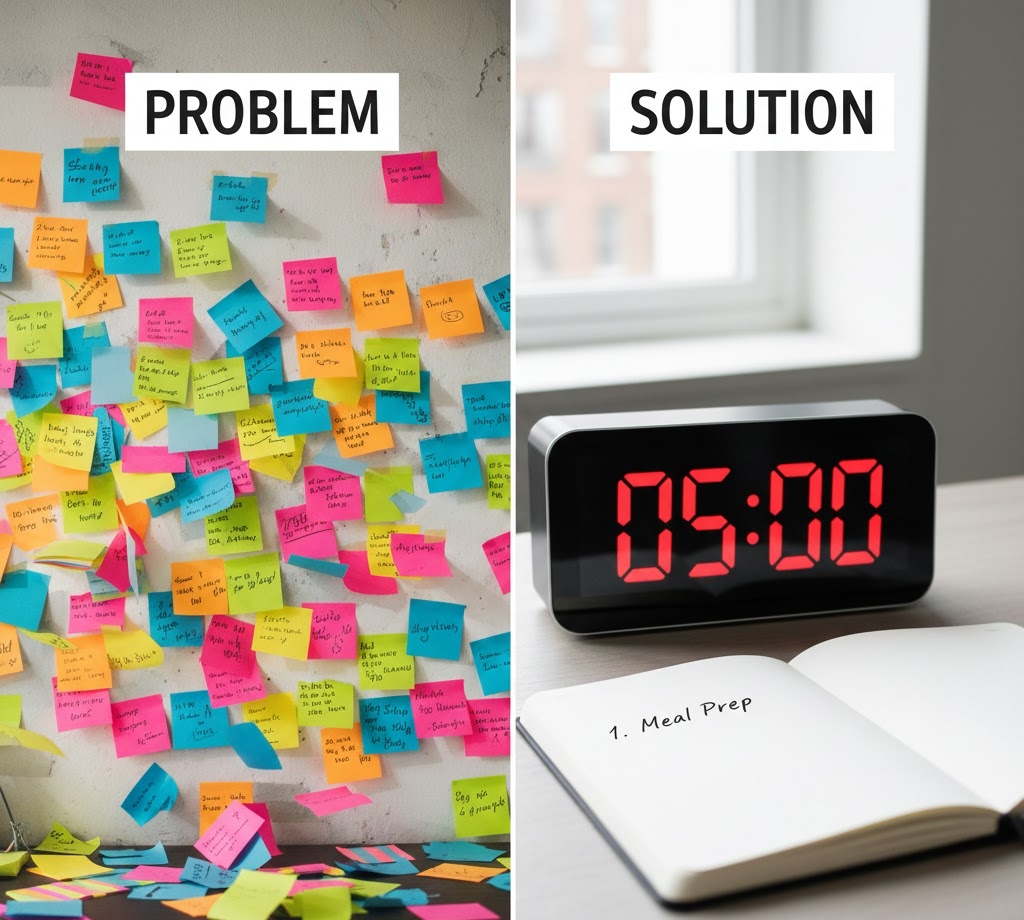
The 5-Minute Rule: Stop Procrastinating & Start Adulting
Paralyzed by the To-Do List? 5 Micro-Habits for Young Adults Who Struggle with Motivation
You know that feeling: you have a massive, important task (filing an insurance claim, organizing your closet, starting a freelance project) but you just... can’t. You're not lazy; you're just experiencing the most common hurdle in adulting: inertia.
That paralyzing resistance to getting started is a real phenomenon. The brain views the complexity and mental load of a huge task as a threat, triggering procrastination as a coping mechanism.
The solution? Stop trying to be productive for an hour. Start trying to be productive for five minutes.
Here is the Adulting Blueprint to hacking your brain and using the 5-Minute Rule to conquer your biggest, most avoided tasks.
The 5-Minute Rule: Your Secret Weapon Against Procrastination
The 5-Minute Rule is simple: If a task can be done in five minutes or less, do it immediately.
But we’re going to apply it to bigger projects, using the initial 5 minutes to generate momentum. The goal isn't to finish the task; it's to break the seal of inertia. Once you start, your brain shifts from avoiding work to completing work.
1. The "Open the App" Hack (The Hardest Step)
The biggest energy suck is the activation energy required to simply begin.
Instead of: "I need to file my taxes." (Huge task)
Do: "I will open the tax software on my laptop for five minutes."
Instead of: "I need to clean my apartment." (Huge task)
Do: "I will gather all the dirty clothes from the floor and put them in the hamper for five minutes."
You are only committing to the smallest possible action required to physically or digitally engage with the task. Once the software is open or your hands are dirty, stopping feels harder than continuing.
2. The Task Deconstruction Technique
Big tasks feel impossible because they are vague. The 5-Minute Rule forces you to get hyper-specific.
Before you start your 5 minutes, ask yourself: "What is the single, next-most-critical action I must take?"
Huge, Avoided Task: "Find a new job."
Single, Next-Most-Critical Action: Update the dates on my current resume.
5-Minute Start Goal: Spend 5 minutes on one resume section.
"Start the freelance project."
Single, Next-Most-Critical Action: Find three visual examples of similar work.
5-Minute Start Goal: Spend 5 minutes curating a reference folder.
"Organize the kitchen cabinets."
Single, Next-Most-Critical Action: Take every can or jar of expired groceries out of the pantry.
5-Minute Start Goal: Spend 5 minutes pulling out expired spices from one drawer.
This technique re-frames the goal from "complete the project" to "complete the micro-task," making it feel achievable.
3. The "Accountability Partner" Alarm
If you know you'll bail after the first five minutes, you need an accountability system that costs you something if you quit.
Set a reward: Tell yourself, "If I work on this task for 15 minutes, I get to watch one episode of my show."
Set a mini-punishment (friendly version): If you don't start the 5-minute block on time, you have to do 10 push-ups or wait until the next hour to try again.
Use a timer: Don't rely on your own discipline. Set a non-negotiable timer for 5 minutes. When it goes off, you are free to stop. The shocking thing is, you usually won't.

4. The "Brain Dump" First
Procrastination is often fueled by decision fatigue; the anxiety of prioritizing what to do first.
Spend your first 5 minutes simply writing down every single thought and step related to the big task, no matter how small or silly. Don't organize it. Just get it out.
Example: Cleaning the Apartment Brain Dump: "Dusting the living room. Buying new cleaning spray. Changing the sheets. Taking the trash out now. What even is that stain?"
This empties the noisy chaos from your head and places it onto paper, transforming a mental burden into a manageable list. Now, you can apply the 5-Minute Rule to the easiest thing on the list (like taking out the trash).
5. Stop When You're Winning
The biggest productivity mistake is working until you hit a wall or get bored. To ensure you successfully start your project again tomorrow, you need to use the "Seinfeld Strategy."
When your 5-minute block ends (or 15, or 30), stop while you still have momentum and know exactly what the next step is.
Instead of working until you finish the thought, stop right in the middle of a clear, easy sub-task. That way, when you sit down tomorrow, you don't have to waste time figuring out where you left off. The next 5 minutes are already laid out for you.
Ready to Build a System, Not Just a Hack?
These micro-habits are powerful, but true Self-Sufficiency comes from having a comprehensive system for managing your time, energy, and goals.
If you’re ready to move past the temporary fixes and get the full Adulting Blueprint for a more intentional, less chaotic life, your next step is mastering your schedule.
→ Download our free, "Hyper-Focused Weekly Planner" and stop letting your to-do list manage you.


